Traditions Chimney Sweeps: Professional Chimney Sweeping Services In Darnestown, MD
At Traditions Chimney Sweeps, we believe that the hearth is the heart of the home, but we also know from our experience as career firefighters that a neglected fireplace can quickly become a hazard. We serve the Darnestown, MD community with a focus on fire prevention and expert maintenance, ensuring that your chimney and fireplace operate as efficiently as possible throughout the shifting Maryland seasons. Whether you are enjoying a quiet evening in a historic farmhouse near Seneca Creek or heating a newer home off Darnestown Road, our team provides the thorough care required to keep your system in top condition. We don’t just “brush and go” – we utilize our specialized training to identify potential risks before they become emergencies, bringing a unique perspective to every sweeping and inspection we perform.
Is It Okay To Skip My Annual Chimney Sweeping?
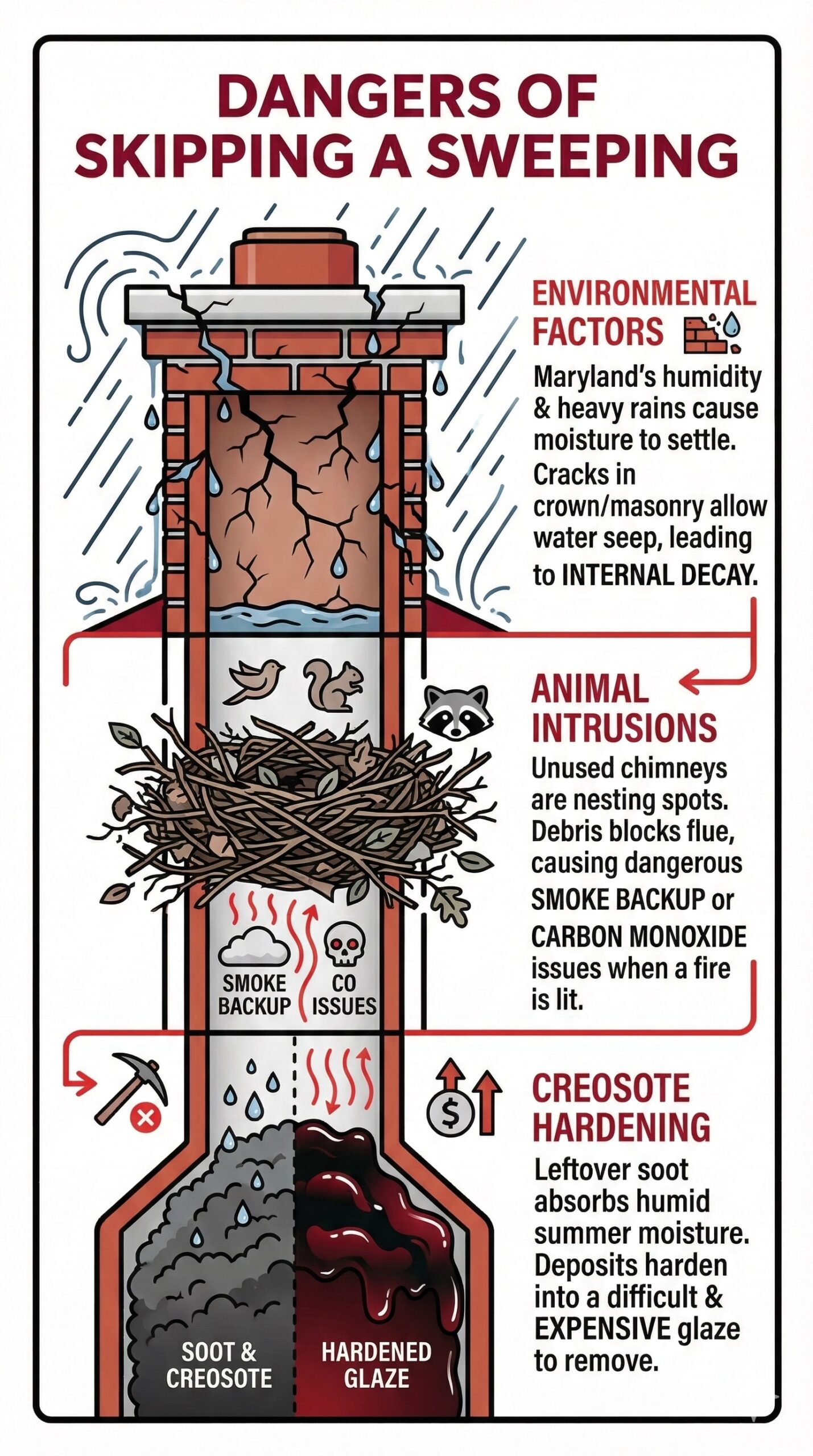
One of the most frequent questions we hear from homeowners in Darnestown is whether they can skip their annual chimney sweeping, especially if they didn’t use the fireplace often the previous year. From our perspective at Traditions Chimney Sweeps, the answer is that skipping an annual checkup can lead to hidden issues that compromise your home’s integrity. Even if you haven’t burned many logs, your chimney is a vertical shaft open to the outdoors, making it a prime target for factors unrelated to fire use.
- Environmental Factors: During the spring and summer, Maryland’s humidity and heavy rains can cause moisture to settle in the flue. If you have any small cracks in your chimney crown or masonry, this water can seep in and begin the process of internal decay.
- Animal Intrusions: Birds, squirrels, and raccoons often view an unused chimney as a perfect nesting spot. Debris from these nests can completely block a flue, leading to dangerous smoke backup or carbon monoxide issues when you finally decide to light that first fire of the season.
- Creosote Hardening: If you burned wood the previous winter, the leftover soot and creosote don’t just disappear. Over the humid summer months, these deposits can absorb moisture and harden into a glaze that is much more difficult (and expensive) to remove later.
We recommend an annual sweep and inspection because it allows us to catch these minor issues when they are still simple fixes. Our goal is to ensure your system is as ready as possible for the first cold snap of autumn. By maintaining a regular schedule, you are not just cleaning a pipe – you’re performing essential preventative maintenance that keeps your household moving toward a safer burning season.
Your Darnestown, MD Chimney Company: We Love This Historic Community
Darnestown is a place where history and nature meet, and it is an area we are incredibly proud to serve. Located at the intersection of Darnestown Road (Route 28) and Seneca Road, this community has been a vital crossroads in Montgomery County since the 18th century. We often find ourselves admiring the local landmarks, such as the Darnestown Presbyterian Church, built from stone hauled from local quarries, and the beautiful Darnestown Heritage Park, which preserves the legacy of the town’s namesake, William Darne.
When we aren’t performing chimney sweeps, we appreciate the scenic beauty of Seneca Creek State Park and the historic C&O Canal, which are just a short drive away. The residents here value the preservation of their beautiful homes—ranging from sprawling estates to historic gems—and we share that value. We treat every home in Darnestown with the respect it deserves, using drop cloths and dust control systems to ensure your interior stays as clean as the day we arrived.
Can a Chimney’s Draft Be Affected By New Nearby Construction?
It is a common misconception that once a chimney is built and “broken in,” its performance is set in stone. However, many Darnestown homeowners are surprised to learn that external changes in the environment—even those happening years after construction—can significantly impact how well a chimney draws air. Drafting is a delicate balance of pressure and physics, and anything that changes the airflow around your roof can disrupt it.
- New Rooflines and Additions: If you or a neighbor adds a second story or a large addition, it can change the wind patterns around your chimney. This often creates “wind washing” or high-pressure zones that can actually push air down your flue rather than allowing smoke to rise.
- Tree Growth: This is a major factor in our wooded Maryland neighborhoods. A small sapling planted twenty years ago may now be a towering oak that towers over your chimney. Overhanging branches can create turbulence or even act as a physical barrier that interferes with the “stack effect” needed for a strong draft.
- Home Modernization: Ironically, making your home more “airtight” with new windows or better insulation can also affect your draft. A fireplace needs to pull air from the room to send smoke up the chimney. If the house is too tight, the chimney may struggle to find enough air to create a draft, leading to smoke entering the living space.
When we visit your home for a sweeping, we don’t just look at the inside of the flue. We evaluate the entire environment. If we find that nearby construction or mature trees are causing your fireplace to smoke, we can recommend solutions like a chimney shroud or a specialized draft-inducing cap. Our priority is making sure your fireplace vents as effectively as possible, regardless of how the neighborhood has changed around you.
What Happens If You Light a Fire When the Flue Is Still Damp After Heavy Rain?
Maryland is no stranger to sudden, heavy downpours, and we often get calls from homeowners who notice a musty smell or even a “sizzling” sound when they light a fire after a storm. If you light a fire in a flue that is still damp, you are essentially creating a steam-cooker environment inside your chimney, which can have several negative consequences.
- Corrosive Sludge: When hot smoke hits a wet flue, the moisture cools the smoke rapidly. This causes creosote and soot to liquefy and turn into a highly acidic sludge. This substance can eat away at mortar joints and metal liners much faster than dry soot ever would.
- Structural Thermal Shock: In older chimneys with clay tile liners, the sudden introduction of high heat to a cold, damp surface can cause “spalling” or cracking. The water trapped in the pores of the tile or brick expands as it turns to steam, which can literally blow the face off the masonry or cause the liner to split.
- Drafting Struggles: A damp flue is significantly harder to “prime.” Because the air inside is heavy with moisture, it is harder for the heat of the fire to push that column of air up and out. This often results in a smoky start to your fire, which can linger and leave your living room smelling like a campfire for days.
We always advise our customers to ensure their chimney has a high-quality cap to keep the rain out in the first place. If you do find that your fireplace is damp, it is often a sign that your cap or flashing has failed. During our sweeping process, we check for these vulnerabilities and clear out any wet debris that might be trapping moisture, helping your system stay as dry and functional as possible.
Does Freeze/Thaw Weathering Accelerate Deterioration in Maryland? How Can Waterproofing Slow It Down?
In the Darnestown area, our winters are characterized by a cycle of freezing nights and thawing days. This “freeze-thaw” cycle is one of the most destructive forces a masonry chimney can face. Because brick and mortar are naturally porous materials—much like a sponge—they soak up water whenever it rains or snows.
- The Expansion Trap: When that absorbed water freezes, it expands by about 9%. This expansion happens inside the very pores of your bricks. Over time, this internal pressure causes the bricks to flake, peel (spalling), or even crack right down the middle. Once the structural integrity of the brick is compromised, the chimney becomes much more susceptible to a partial or total collapse.
- Mortar Decay: The mortar joints between your bricks are even more vulnerable. As they cycle through freezing and thawing, the bond between the brick and mortar weakens, leading to “tuckpointing” needs where the mortar literally falls out of the joints.
- The Waterproofing Solution: We offer professional-grade masonry waterproofing that acts as a “breathable” barrier. Unlike standard paints or sealants that trap moisture inside (which is actually worse), our specialized formulas allow water vapor to escape while preventing liquid water from entering.
Applying a water repellent is one of the most effective ways we can help you prolong the life of your chimney. It keeps the masonry dry, which means the freeze-thaw cycle has nothing to expand. By investing in this preventative step, you make your chimney significantly more resilient against the Maryland elements, ensuring it stands as a beautiful part of your home for many years to come.
Do Gas Fireplaces Need Professional Inspections & Cleaning?
Many of our neighbors in Darnestown have made the switch to gas fireplaces for their convenience and “cleaner” look. A common myth is that because gas doesn’t produce creosote, these systems don’t require professional attention. However, at Traditions Chimney Sweeps, we service gas units frequently because they have their own set of unique requirements to remain as safe as possible.
- Venting Obstructions: Just like wood-burning chimneys, gas vents can be blocked by bird nests, spider webs, or debris. Because gas burns so cleanly, you might not see smoke if there is a blockage, but dangerous carbon monoxide could still be backing up into your home.
- Component Wear: Gas fireplaces rely on pilot lights, thermocouples, and burners that can become clogged with dust or “carbon soot.” This buildup can lead to delayed ignition (that “poof” sound when it starts) or cause the system to shut down entirely when you need it most.
- Glass and Log Maintenance: Over time, a white film can develop on the glass of a gas fireplace. This is often a byproduct of the combustion process and, if left too long, can permanently “etch” the glass. We also check the positioning of the ceramic logs, as even a small shift can cause improper combustion and lead to soot buildup.
When we inspect a gas fireplace, we are checking for leaks, verifying that the venting is clear, and ensuring all safety sensors are functioning correctly. We want you to have the peace of mind that comes with knowing your gas system is working as efficiently as possible, providing you with warmth without the hidden risks of neglected maintenance.
Trust Traditions Chimney Sweeps for Your Darnestown Home
Your home is likely your largest investment, and your fireplace should be a source of joy, not stress. At Traditions Chimney Sweeps, we bring our firefighter’s eye for detail and our craftsman’s passion for quality to every job in Darnestown, MD. We take pride in offering the thorough sweeping, detailed inspections, and long-lasting repairs that our community depends on.
Don’t wait for the first frost to realize your chimney needs attention. Let our family-owned team help you prepare your home for the seasons ahead. Book your chimney sweeping today.
Mon - Fri: 9 AM - 5 PM
Sat - Sun: Closed